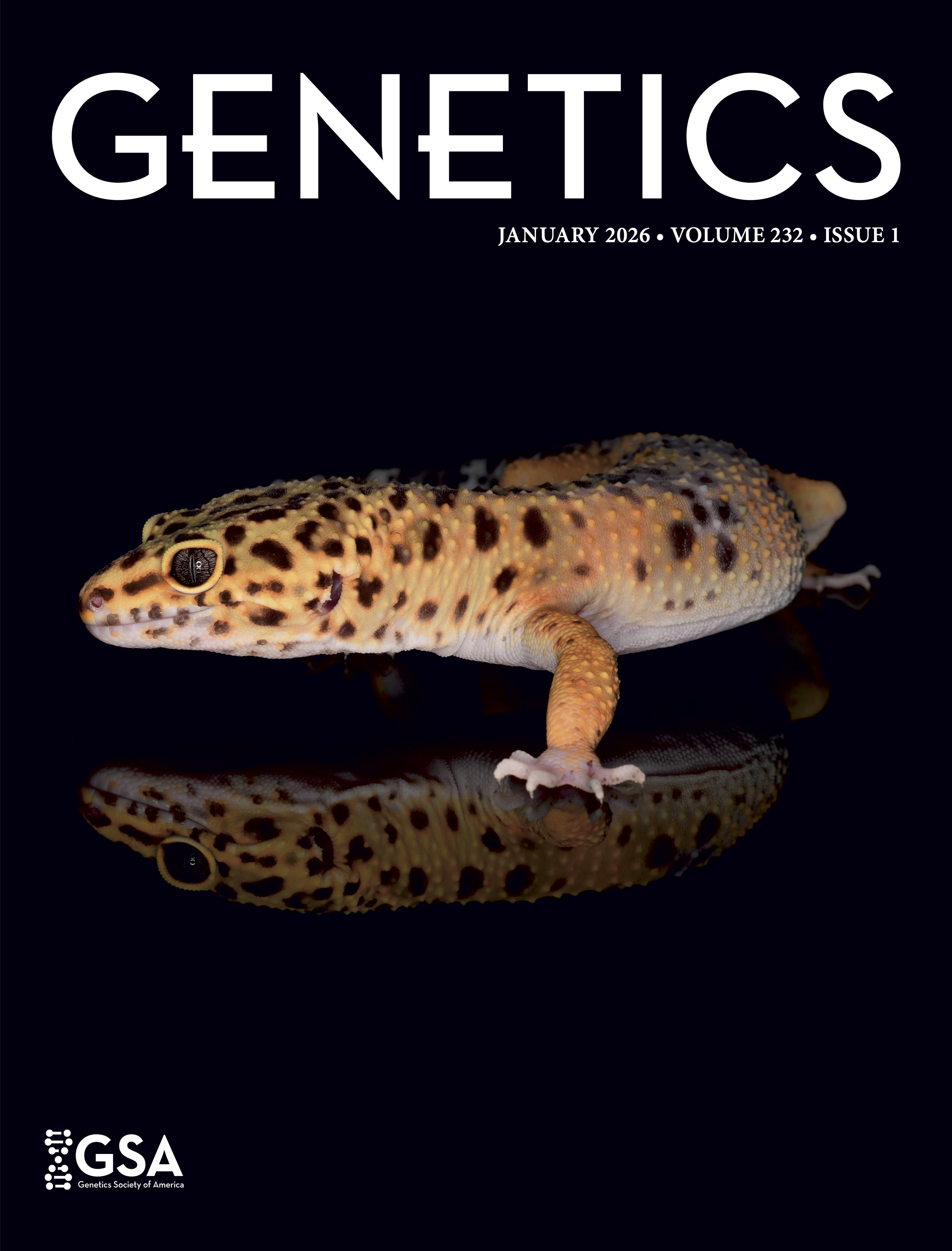
Skin color is essential for animal survival, enabling both camouflage and visual signaling. While the genetics of pigmentation are well studied in mammals, much less is known in reptiles. We are happy to share that our latest research addressing this gap has been selected for the cover of the journal Genetics.
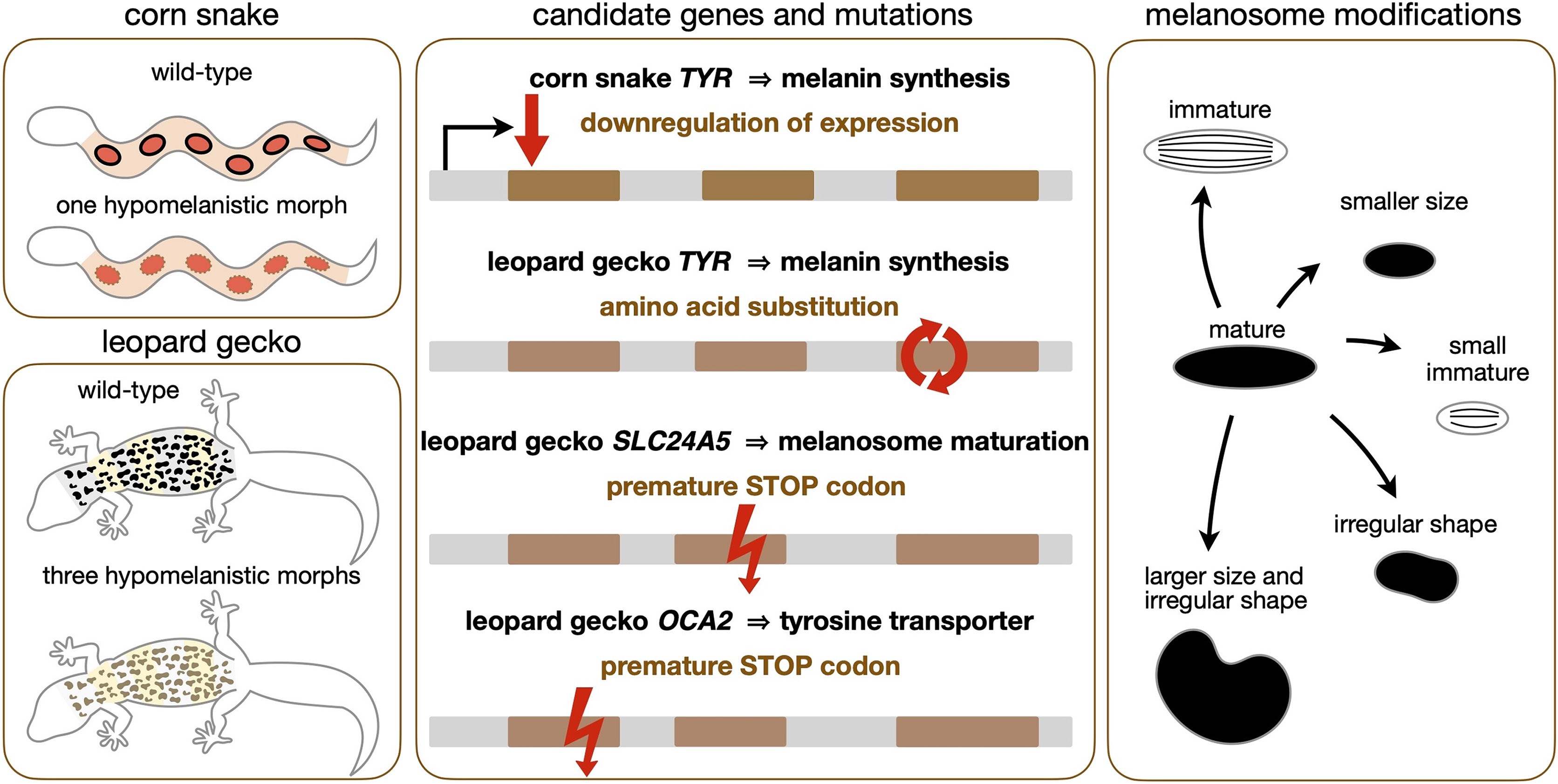
In this study, we combine genomics, transcriptomics, and histology to investigate hypomelanism—reduced melanin pigmentation— in reptiles. We analyzed one hypomelanistic corn snake morph and three hypomelanistic leopard gecko morphs, supported by a newly assembled chromosome-level genome from a wild-type leopard gecko. Our results identify candidate mutations in three pigmentation genes—TYR, SLC24A5, and OCA2 —each affecting melanin synthesis or melanosome maturation (see graphical abstract below).
Bulk RNA sequencing and electron microscopy further reveal morph-specific disruptions in pigmentation pathways and melanophore ultrastructure, pointing to multigenic and modular control of skin coloration.
By appearing on the cover of Genetics, this work highlights the growing recognition of reptiles as powerful comparative models and underscores the evolutionary flexibility of melanogenesis across vertebrates.
The original article is available here:
Candidate genes underlying hypomelanistic morphs in squamate reptiles
Pierre Beaudier, Asier Ullate-Agote & Athanasia C Tzika*
Genetics 232, Issue 1, January 2026
DOI: https://doi.org/10.1093/genetics/iyaf236
*athanasia.Tzika@unige.ch
Graphical abstract